
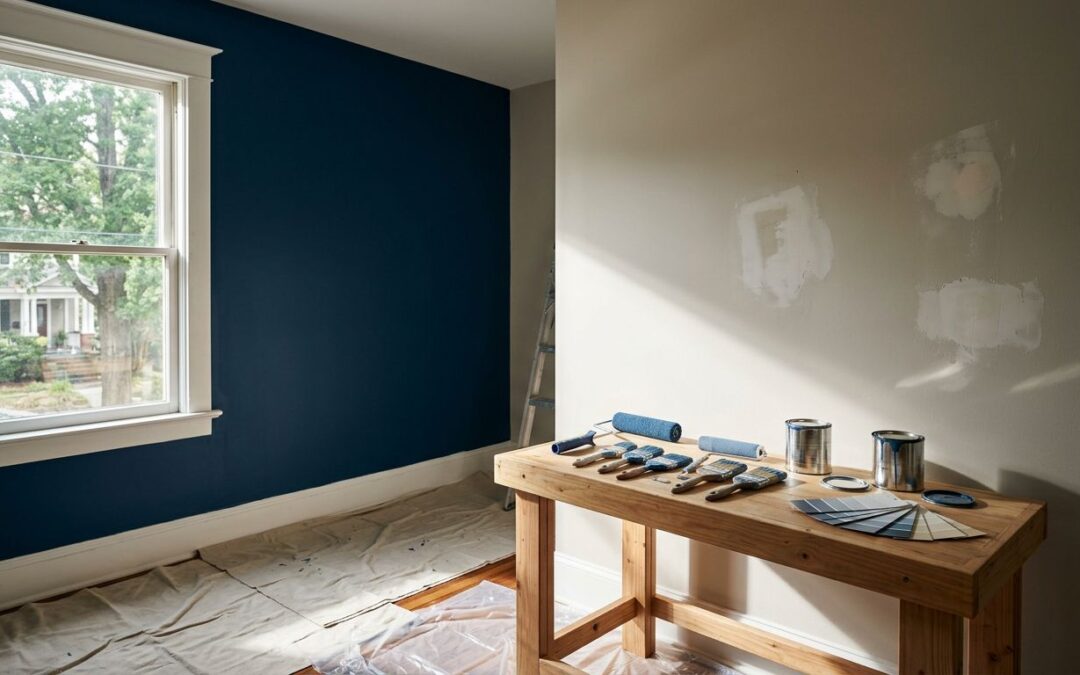
A fresh coat of paint can make a home feel cleaner, brighter, and more put together, but the final price depends on more than wall color. In Raleigh NC, the interior painting cost Raleigh homeowners should expect is shaped by room size, wall condition, included surfaces, and required preparation.
A simple bedroom refresh is one kind of project, while painting walls, ceilings, trim, doors, stairwells, and repaired drywall throughout a home is another. Defining the scope helps you understand your home interior needs, evaluate a free estimate, and consider the potential effect on home value.
Key Takeaways
- Interior painting costs in Raleigh vary by room size, wall condition, ceiling height, included surfaces, and preparation needs.
- A straightforward small room may cost roughly $300 to $800, while painting a 2,000-square-foot home can range from about $4,000 to $12,000 or more for a complete scope.
- Preparation can account for 40 to 60 percent of the project’s time, particularly when walls need drywall repair, sanding, caulking, or stain treatment.
- Compare estimates by checking whether they include ceilings, trim, doors, protection, cleanup, multiple coats, materials, and specialty work such as popcorn ceiling removal.
- DIY painting may suit a small room with clean walls, but professional painters are often the better choice for large projects, high ceilings, detailed trim, repairs, or tight schedules.
Interior Painting Cost Raleigh: Realistic Local Ranges
For homes in Raleigh NC, interior painting projects across Wake County vary widely because layouts, wall conditions, and finish details differ. Professional painters usually charge less for clean, empty rooms with standard ceilings. Furnished spaces with high ceilings, detailed trim, and years of nail holes or patchwork cost more. Learn more about our interior painting services in Raleigh
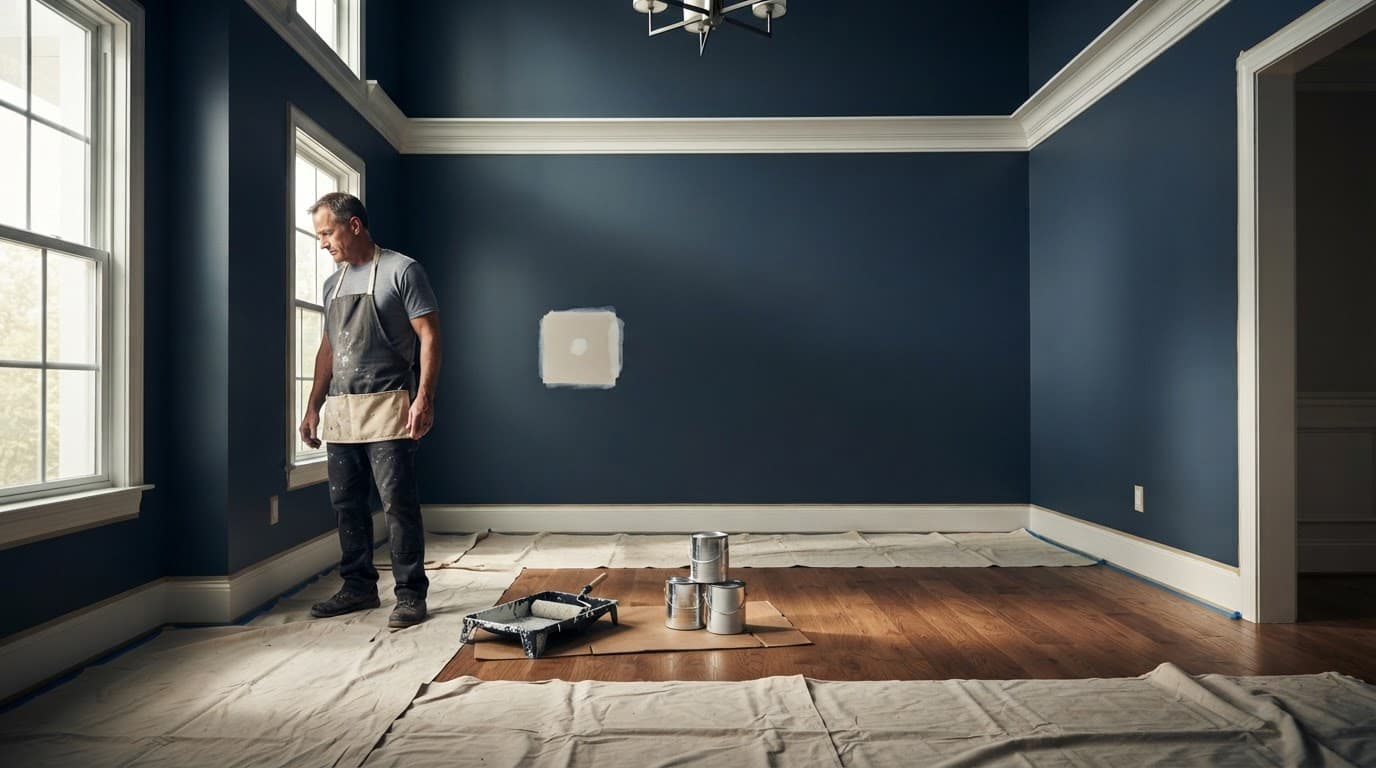
Typical room-by-room painting prices
For a straightforward small bedroom or bathroom, plan on roughly $300 to $800 when the walls are in good condition. Local per-room pricing examples show why room size and prep work matter so much, especially when drywall repair is needed.
A 12-by-12 bedroom may cost around $290 to $870. A larger 14-by-16 room can reach $450 to $1,350. Living rooms often run $900 to $2,000 when they include multiple colors, an accent wall, color transitions, detailed trim, or repairs.
This cost breakdown reflects labor, materials, preparation, and scope, so these figures are planning ranges, not fixed prices. A contractor needs to see the walls, ceilings, trim, and access points before giving you a dependable quote. Use these ranges when requesting a free estimate from local contractors.
What a whole-home project can cost
For a 2,000-square-foot home, professional interior painting often falls around $4,000 to $12,000. Local labor rates vary by project scope. A complete scope with walls, ceilings, doors, trim, extensive preparation, and premium coatings can reach $6,500 to $16,500.
The important detail is the scope. A home’s square footage isn’t the same as its paintable wall area. An open foyer, two-story ceilings, crown molding, and several bedrooms can add substantial labor.
A broad labor and supplies range of $2 to $5 per square foot is useful for early budgeting. Add-ons such as popcorn ceiling removal should be listed separately from a standard whole-home repaint, and your room-by-room estimate should still spell out what is included.
What Raises the Price of Interior Painting
Paint is visible, but surface preparation is where much of the work happens. A quality finish needs clean surfaces, sound drywall, smooth edges, proper caulking, and enough dry time between coats.
Surface preparation carries real value
Preparation can account for 40 to 60 percent of a painting project’s time, especially in older homes or well-loved family spaces. That prep work may include drywall repair, filling nail holes, repairing seams, sanding uneven patches, caulking trim gaps, cleaning walls, and protecting floors and furniture.
A wall with a few small picture-hook holes is routine. Water stains, peeling paint, loose tape joints, smoke residue, or poorly matched previous repairs may require drywall repair before painting. Popcorn ceiling removal is a separate preparation decision.
A lower quote that leaves out preparation doesn’t remove that work. It often leaves the problem visible beneath new paint.
This is why local project pricing can vary between two homes with the same floor plan. The walls tell the real story.
High ceilings, trim, and stairwells add labor
Tall rooms take more than a longer roller pole. Painters need secure access, careful cutting-in, extra protection for nearby floors and railings, and more time to maintain an even finish.
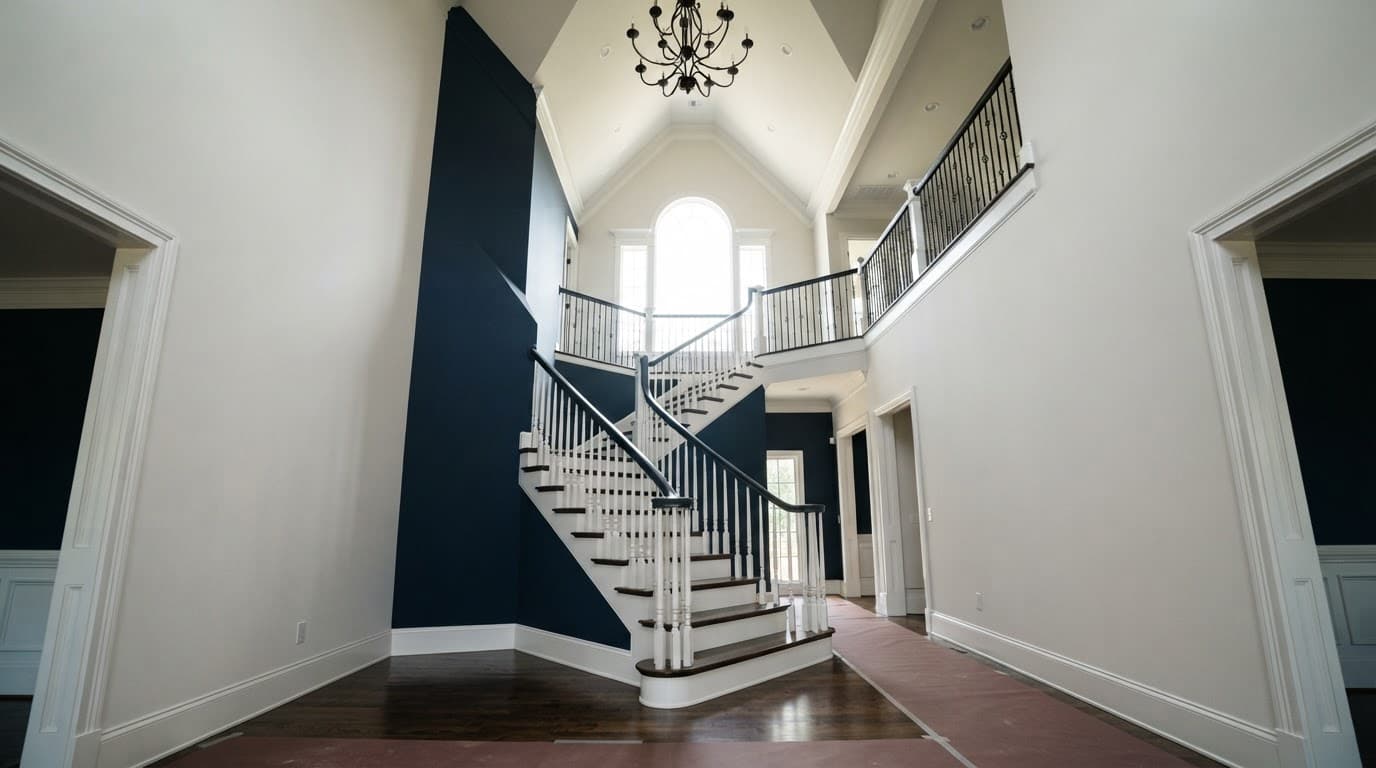
A vaulted foyer, open staircase, detailed crown molding, wainscoting, or extensive baseboards can change the quote quickly. Trim painting is slower because clean lines matter. Doors also need their own preparation and drying plan.
Ask whether your estimate includes walls only, or walls plus ceilings, trim, doors, closets, and stairwells. That one conversation prevents most pricing surprises.
How to Compare Raleigh Painting Estimates
A clear interior painting estimate for a home in Raleigh NC gives you more than a total. It explains the work behind the number, including surface preparation, so you can see where your budget is going and what finish to expect.
Use this quick guide when reviewing proposals from local contractors:
| Scope item | Lower-cost situation | Costs more when |
|---|---|---|
| Walls | One color, clean drywall, standard height | Dark color changes, repairs, tall ceilings |
| Ceilings | Flat, accessible rooms | Vaulted areas, stains, popcorn texture |
| Trim and doors | Basic baseboards and few doors | Detailed molding, built-ins, many doors |
| Preparation | Light patching and caulking | Peeling paint, water damage, texture repairs |
| Access | Empty or lightly furnished rooms | Heavy furniture, occupied rooms, tight stairwells |
The final quote should include labor, paint, materials, protection, preparation, and cleanup. If a line item is unclear, ask before work begins, not after the first coat is on the wall.
Questions worth asking before you hire
The professional painters you consider should walk through the home with you and discuss its condition, style, schedule, goals, and budget. You should leave the conversation knowing what will be painted, how surfaces will be protected, and what repairs are included.
Ask whether the quote covers:
- Multiple coats where needed for color coverage and durability.
- Prep work, including drywall repair, caulking, and sanding.
- Paint brand, sheen, primer where needed, and product options.
- Separate pricing for specialty work, including popcorn ceiling removal.
- Furniture protection, daily cleanup, and final touch-ups.
- Warranty terms and how the crew handles concerns after completion.
A professional residential painting company should make the details clear without pressuring you into a decision. A free estimate is simply a chance to understand your options and make the right choice for your home.
DIY Painting vs. Hiring Professional Painters
DIY painting can lower the cash cost for a small interior painting project with clean walls. A gallon of interior paint typically covers about 300 to 400 square feet, but paint is only part of the expense. Rollers, brushes, trays, tape, drop cloths, filler, sandpaper, primer, and ladders add up. Good paint quality can improve coverage, but it doesn’t eliminate those supply costs.
When a DIY project makes sense
Painting a single guest room with smooth walls and standard ceilings can be a manageable weekend project. Choose a quality paint, take time with patching, and allow full drying time between coats.
Professional painters make more sense when the project includes several rooms, darker color changes, or trim. Vaulted rooms, difficult access, drywall repair, or a move-in deadline also favor professional help. A free estimate helps compare costs for complex projects. A clean paint job depends on straight lines, even coverage, careful protection, and lasting polish.
A well-prepared professional interior finish can often look good for five to seven years in normal living spaces. Kitchens, bathrooms, busy hallways, and homes with children or pets may need touch-ups sooner.
Raleigh humidity still matters indoors
Humidity does not automatically ruin an indoor paint job. It can slow drying and affect recoat timing when HVAC is off, windows are open, or a room has poor airflow.
A careful crew checks the condition of the surfaces and gives each coat the time it needs. Rushing the process can lead to uneven sheen, poor adhesion, or marks that show up after the paint dries.
Exterior painting has its own moisture and weather concerns, so it should be quoted separately from interior work. The same applies to related projects such as cabinet painting and popcorn ceiling removal.
Paint Choices, Permits, and Add-On Work
Paint quality affects coverage, washability, and the look of the final finish. Premium coatings often cost more upfront, but they may cover better and hold up longer in active areas. Confirm the selected product in the written scope.
Low VOC paint options for Raleigh homes
Lower-emission and zero-VOC paints are popular choices for bedrooms, nurseries, occupied homes, and households sensitive to paint odor. The EPA’s overview of VOCs indoors explains that paints can release volatile organic compounds into the air.
Ask your painter which product line is being used, and have it listed in the written scope. Also ask whether the tint added to the base changes the VOC content. Good ventilation and proper drying time still matter, even with lower-emission coatings.
Do you need a permit for interior repainting?
Routine interior painting generally doesn’t require a permit. The City of Raleigh’s residential permit guidance focuses on alterations and repairs such as room renovations, wall changes, windows, doors, roofing, and trade work.
The conversation changes if your project includes moving walls, electrical work, plumbing changes, or structural repairs. Specialty work, such as popcorn ceiling removal, may raise separate safety or permit questions. List add-on work in the written scope and confirm requirements before work begins.
Frequently Asked Questions
How much does it cost to paint the interior of a home in Raleigh?
A 2,000-square-foot home often costs about $4,000 to $12,000 for professional interior painting. Projects with ceilings, trim, doors, extensive preparation, or premium coatings can reach $6,500 to $16,500.
What is included in an interior painting estimate?
A clear estimate should identify labor, paint, materials, surface preparation, protection, and cleanup. It should also state whether ceilings, trim, doors, closets, stairwells, multiple coats, and repairs are included.
Why do interior painting quotes vary between Raleigh homes?
Wall condition, room layout, access, ceiling height, and the amount of trim can significantly change the labor involved. Repairs for nail holes, peeling paint, water stains, drywall damage, or uneven previous work can also raise the price.
Is it cheaper to paint a room myself?
DIY painting can reduce the cash cost for a small room with clean walls and standard ceilings, although supplies and equipment still add up. Professional painters are often worth considering for multiple rooms, difficult access, extensive preparation, or a move-in deadline.
Do I need a permit for interior painting in Raleigh?
Routine interior repainting generally does not require a permit. Permits or additional requirements may apply if the project includes moving walls, electrical or plumbing work, structural repairs, or certain specialty work.
A Clear Starting Point for Your Painting Project
The right painting estimate is not always the lowest one. It is the one that clearly accounts for preparation, access, materials, finish details, and the condition of your home.
When you understand local interior painting prices for a complete scope of work, you can choose a painter with confidence. Careful planning, quality materials, and skilled preparation create a durable finish that supports your home’s appeal and home value. A free estimate turns that planning range into a project-specific quote.
Every interior painting project is different, so the best way to determine your actual cost is with a personalized estimate. Click here to request a free estimate from Paint & Co. for your Raleigh interior painting project.